|
Ehlers-Danlos
syndrome (EDS) is a heterogeneous group of heritable connective
tissue disorders, categorized by hypermobility, skin
extensibility and tissue fragility. The cardinal manifestations
of EDS are hyperextensible skin, hypermobile joints, easy
bruisability, and generalized fragility of various connective
tissues. EDS results from the molecular abnormality of the
connective tissues, and the clinical and genetic heterogeneity
are, in part, a reflection of an underlying biochemical
heterogenity. The skin in EDS is characterisic in texture and
consistency; it is soft, doughy, and velvety to the touch, and
it has been compared to the feel of a wet chamois or a fine
sponge. When pulled, it is hyperextensible. Cutaneous fragility,
manifested by splitting of the skin to insignificant trauma, may
be a prominent feature. Typically, these wounds occur over the
shins, knees, elbows, forehead, and chin and often present a
gaping "fishmouth" appearance owing to the retraction
of the adjacent skin. The cellular phase of wound healing
proceeds normally, but acquisition of tensile strength is
delayed. This results in characteristic "cigarette
paper" scarring. These scars appear thin, atrophic, shiny,
and broad. Other skin manifestations include the so- called
molluscoid pseudotumors found typically at pressure points such
as the heel, elbows, and knees, representing irregular, firm,
subcutaneous masses resulting from fibrosis or calcification of
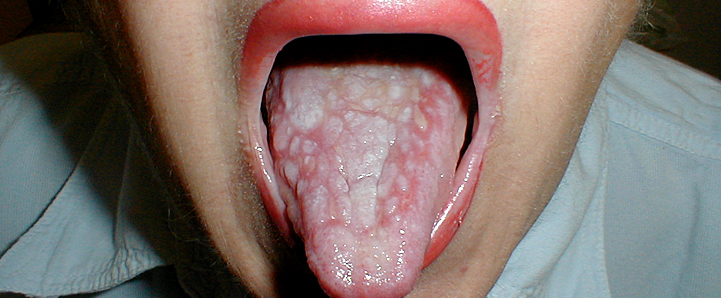
hematomas. Joint hypermobility is a cardinal feature. The facies
are often slightly abnormal, with epicanthial folds and ocular
hypertelorism. There may be a high arched palate and frequently
the patient can touch the tip of the nose with the tongue.
|
|
TYPES
OF EHLERS-DANLOS SYNDROME
TYPE
I - GRAVIS - Autosomal Dominant
Prominent
skin hyperextensibility, fragility and easy bruisability; 'cigarette paper'
scars; molluscoid psuedotumours (swellings in the skin) and subcutaneous
spheroids (soft accumulations of tissue under the skin which cause soft
non-malignant lumps); large and small joint hypermobility; frequent varicose
veins. Premature birth due to early rupture of membranes is common.
TYPE
II - MITIS - Autosomal Dominant
Skin
is soft with easy bruisability but less hyperextensible and with less tendency
to split and scar than Gravis type. Joint hypermobility is less marked.
Varicose veins and hernia may occur.
TYPE
III - BENIGN HYPERMOBILITY - Autosomal Dominant
Skin
is soft but hyperextensibility, splitting and scarring are limited. Joint
hypermobility is generalised, affecting large and small joints; dislocation is
common. Bruising tendency variable. Some patients in this category have
defects similar to those causing EDS IV and this group is also distinguished
from the original Type Xi (benign familial articular hypermobility) which may
lack the characteristic abnormality in collagen.
TYPE
IV - ECCHYMOTIC OR ARTERIAL - Autosomal Dominant/Recessive
Skin
is characteristically thin (translucent) with veins easily seen over trunk,
arms, legs and abdomen. Skin is not usually hyperextensible. Minor trauma
leads to extensive bruising (ecchymosis). Joint mobility is usually normal
aside from the small joints in the hands. Cardiovascular and gastrointestinal
damage can occur (e.g. arterial rupture and intestinal perforation). Uterine
rupture in pregnancy may occur, thus pregnancy should be approached with
caution.
TYPE
V - X-LINKED - X-Recessive
Similar
to Type II, prominent skin hyperextensibility with splitting, scarring and
extensive bruising. Joint hypermobility is limited. Spheroid and molluscoid
pseudotumours may be found. Orthopaedic and operating complications are
common.
TYPE
VI - OCULAR - Autosomal Recessive
Soft,
velvety, hyperextensible skin, hypermobile joints and scoliosis (curvature of
the spine). Scarring usually less severe that Type I. Marfanoid habitus. Some
individuals have ocular fragility and keratoconus (excessive curvature and
thinning of the cornea).
TYPE
VII - ARTHROCHALASIS MULTIPLEX CONGENITA - Autosomal
Dominant/Recessive
Soft
skin with relatively normal scarring, marked joint hypermobility, marked
hypotonia, congenital hip dislocation, short stature. Part of one or other of
the collagen genes has been shown to be faulty in five different Type VII
families. Genetic prenatal diagnosis can be offered to this particular
sub-group of Type VII
TYPE
VIII - PERIODONTAL - Autosomal Dominant
Prominent
skin fragility with abnormal pigmented scars. Skin hyperextensibility is
normal. Joint laxity may be present. Often there is generalised weakness
(Aesthenic habitus) and periodontitis.
TYPE
IX - CATEGORY CURRENTLY UNALLOCATED
Originally
used to denote X-linked cutis laxa which is no longer regarded as
Ehlers-Danlos Syndrome
TYPE
X - FIBRONECTIN PLATELET DEFECT - Uncertain
Soft,
mildly extensible skin, mild joint hypermobility, bruising.
|
|